Flow over Weirs
Product Overview
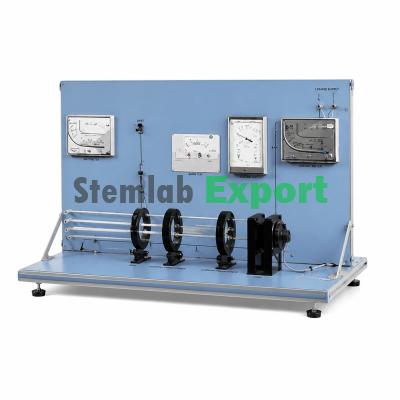
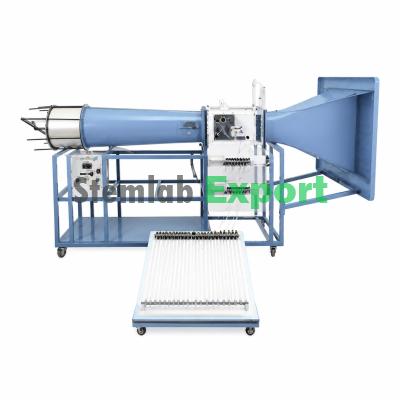
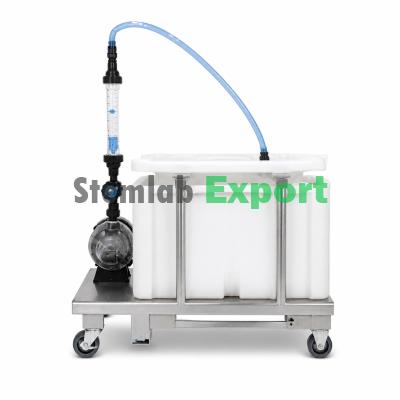
The Flow over Weirs, has many elements that are used in combination with the Hydraulics Bench (ATENG 12035).
Technical Specifications
ATENG 11705 — Flow over Weirs
13.- To measure the liquid level using a scale.
14.- Observing the effect of a liquid in motion (losses due to
- Pitot static tube: friction). SPECIFICATIONS
- Head diameter: 2.5 mm.
The unit is mounted on an aluminum structure and painted steel
- Transparent pipe:
panels and consists of a vertical tank (made of methacrylate
- 32 mm internal diameter and 430 mm length approx. diameter: 100 mm and height: 575 mm) containing water that is
- Hose connections. connected to different vertical manometer tubes (460 mm length):
“U” shape vertical tube.
- Water manometer, 500 mm length.
Two parallel vertical tubes.
Easy and quick coupling system built-in.
Vertical tube with variable section.
Anodized aluminum structure and panel of painted steel. Vertical tube with a pivot that allows it to incline from 0 to 90°.
These tubes can be used individually or in combination for the
different demonstrations.
DIMENSIONS AND WEIGHTS
Vernier hook and point gauge.
Piezometric tube.
- Dimensions: 800 x 450 x 700 mm approx. Manual air pump.
(31.49 x 17.71 x 27.55 inches approx.) Purge valve.
- Weight: 15 kg approx. Plug to close the tank, so that it is not open to atmospheric pressure.
(33 pounds approx.) DIMENSIONS AND WEIGHTS
- REQUIRED ELEMENTS (Not included) Dimensions: 700 x 350 x 800 mm approx. (27.55 x 13.77 x 31.49 inches approx.)
- Weight:15 kg approx. (33 pounds approx.)
- ATENG 12035. Hydraulics Bench or ATENG 12037. Basic Hydraulic Feed REQUIRED ELEMENTS (Not included)
System.
- It can work in autonomous way.
9
2 Units
h Measurement
ATENG 11719. Rotameter
GENERAL DESCRIPTION
The Rotameter, “ATENG 11719”, is a device
developed for the study of flow measurement in fluid systems.
This unit allows students to analyze the operating principle of
variable area flowmeters with a float, which are widely used in
industrial and hydraulic applications. The inlet flow is supplied
through the Hydraulic Bench, “ATENG 12035”.
The ATENG 11719 consists of a vertical tube through which the
fluid flows upward. Inside, a float moves until it reaches an
equilibrium state between the upward force exerted by the
flow and its own weight. This equilibrium point allows for an
accurate measurement of the instantaneous flow rate, as the
position of the float is directly proportional to the velocity of
the flow.
- Additionally, the ATENG 11719 offers a key advantage: it does not
require minimum straight pipe sections for installation, allowing
it to be placed directly before or after elbows and valves without
significantly affecting system pressure. This feature enhances its
adaptability and makes it an essential resource for practical
learning in hydraulics and flow measurement.
PRACTICAL POSSIBILITIES
1.- Flow measurement.
Anodized aluminum structure and panel of painted steel.
Variable area rotameter with float.
- Measurement range: 600 – 6000 l/h.
- Material: transparent PVC.
- Accuracy class: 4.
Quick-plug for an easy connection.
DIMENSIONS AND WEIGHTS
- Dimensions: 400 x 300 x 900 mm approx.
(15.74 x 11.81 x 35.43 inches approx.)
- Weight: 10 kg approx.
(22 pounds approx.)
REQUIRED ELEMENTS (Not included)
- It can work either on its own or with ATENG 12035. Hydraulics Bench.
10
2 Units
h Hydrostatics
ATENG 11723. Hydrostatic Pressure ATENG 11725. Metacentric Height Demonstration
GENERAL DESCRIPTION GENERAL DESCRIPTION
The unit consists of a quadrant assembled to the arm of a scale
The unit consists of a floating methacrylate prismatic base, with
that swings around an axis.
a vertical mast placed on it. An adjustable mobile mass has
When the quadrant is immersed in the water tank, the force that
acts on the flat rectangular front surface exerts a momentum been added to alter the position of the center of gravity.
with respect to the supporting axis.
A weight that can be horizontally and vertically displaced allows
The swinging arm is fitted with a tray and an adjustable counter
for modification of the floating base heel.
balance.
The tank has adjustable supporting legs for levelling. A plumb bob, attached to the upper part of the mast, is used
It has a drainage valve. to measure the angle of heel of the floating base with the aid
The level reached by the water inside the tank is indicated by of a graduated scale.
a graduated scale.
PRACTICAL POSSIBILITIES PRACTICAL POSSIBILITIES
1.- Determination of the center of pressures with an angle of 1.- Analytical location of the center of gravity.
90°, partially submerged.
2.- Experimental location of the center of gravity (ATENG 11725).
2.- Determination of the resultant force with an angle of 90°
partially submerged. 3.- Location of the center of buoyancy.
3.- Determination of the center of pressures, angle <> 90°
4.- Location of the metacentric center with no list on the boat.
partially submerged.
4.- Determination of the equivalent force with an angle 5.- Location of the metacentric center with list on the boat with
<>90° partially submerged. the instability method.
5.- Determination of the center of pressures with an angle of
6.- Location of the metacenter center with list on the boat with
90° totally submerged.
the variation of the center of gravity method.
6.- Determination of the resultant force with an angle of 90°
totally submerged.
7.- Determination of the center of pressures, angle <>90° SPECIFICATIONS
totally submerged.
- 8.- Determination of the resultant force, angle <>90° totally Maximum angle: +/- 13°.
submerged.
- Corresponding lineal dimension: +/- 90 mm.
9.- Balance of momentum.
- Dimension of the float:
- Length: 353 mm.
- Tank capacity: 5.5 l. Width: 204 mm.
Distance between the suspended masses and the support
- Total height: 475 mm.
- point: 285 mm.
- Area of the section: 0.007 m².
DIMENSIONS AND WEIGHTS
- Total depth of the submerged quadrant: 160 mm.
- Height of the support point on the quadrant: 100 mm.
- Dimensions: 750 x 400 x 750 mm approx.
A set of masses of different weights is supplied (4 of 100 gr, 1
of 50 gr, 5 of 10 gr, and 1 of 5 gr). (29.52 x 15.74 x 29.52 inches approx.)
- Weight: 5 kg approx.
DIMENSIONS AND WEIGHTS
(11 pounds approx.)
- Dimensions: 550 x 250 x 350 mm approx.
(21.65 x 9.84 x 13.77 inches approx.)
- Weight: 5 kg approx. REQUIRED ELEMENTS (Not included)
(11 pounds approx.)
- ATENG 12035. Hydraulics Bench or ATENG 12037. Basic Hydraulic Feed
REQUIRED ELEMENTS (Not included)
System.
- It can work in autonomous way. - Scale.
11
2 Units
h Hydrostatics
ATENG 11726. Metacentric Height Demonstration ATENG 11728. Metacentric Height Demonstration
of a “V” Shaped Floating Body of a “U” Shaped Floating Body
GENERAL DESCRIPTION GENERAL DESCRIPTION
The unit consists of a floating methacrylate body with a vertical The unit consists of a floating methacrylate body with a vertical
mast placed on it. An adjustable mobile mass has been added mast placed on it. An adjustable mobile mass has been added
to alter the position of the center of gravity. to alter the position of the center of gravity.
The base of the floating body is “V” shaped, simulating one of The base of the floating body is “U” shaped, simulating one of
the different frame cross-sections of a boat. the different frame cross-sections of a boat.
A weight that can be horizontally and vertically displaced allows A weight that can be horizontally and vertically displaced allows
for modification of the floating base heel. for modification of the floating base heel.
A plumb bob, attached to the upper part of the mast, is used A plumb bob, attached to the upper part of the mast, is used
to measure the angle of heel of the floating base with the aid to measure the angle of heel of the floating base with the aid
of a graduated scale. of a graduated scale.
PRACTICAL POSSIBILITIES PRACTICAL POSSIBILITIES
1.- Study of the stability of a floating body with “V” shaped 1.- Study of the stability of a floating body with “U” shaped
base. Angular displacements. base. Angular displacements.
2.- Study of the stability of a floating body with “V” shaped 2.- Study of the stability of a floating body with “U” shaped
base. Different positions of the center of gravity. base. Different positions of the center of gravity.
3.- Determination of the metacentric height of a floating body 3.- Determination of the metacentric height of a floating body
with “V” shaped base. with “U” shaped base.
SPECIFICATIONS SPECIFICATIONS
Floating body made of methacrylate with “V” shape base. Floating body made of methacrylate with “U” shaped base.
- Maximum angle: +/- 13°. Maximum angle: +/- 13°.
- Corresponding linear dimension: +/- 90 mm. Corresponding linear dimension: +/- 90 mm.
DIMENSIONS AND WEIGHTS DIMENSIONS AND WEIGHTS
- Dimensions: 350 x 200 x 500 mm approx. Dimensions: 350 x 200 x 500 mm approx.
(13.77 x 7.87 x 19.68 inches approx.) (13.77 x 7.87 x 19.68 inches approx.)
- Weight: 5 kg approx. Weight: 5 kg approx.
(11 pounds approx.) (11 pounds approx.)
REQUIRED ELEMENTS (Not included) REQUIRED ELEMENTS (Not included)
- ATENG 12035. Hydraulics Bench or ATENG 12037. Basic Hydraulic Feed - ATENG 12035. Hydraulics Bench or ATENG 12037. Basic Hydraulic Feed
System. System.
- Scale. - Scale.
12
2 Units
h Hydrostatics
ATENG 11729. Pascal’s Principle Demonstration ATENG 11731. Fluid Properties
Detail of the 3
different vessels
GENERAL DESCRIPTION GENERAL DESCRIPTION
This unit has been designed to allows the study of the fundamental
The ATENG 11729 unit allows to demonstrate Pascal’s principle, that is properties of fluids and their behaviour in practical applications.
to say, that pressure in an incompressible fluid has no relation
We can study capillarity, density and relative density (specific
with the size of the column section, it only depends on its head
gravity), buoyancy (Archimedes principle), viscosity, atmospheric
(level of the liquid) and on the nature of the liquid. For that pressure, etc.
purpose, the unit consists of three vessels with the same diameter
on their base but different shape, so that they can be compared.
PRACTICAL POSSIBILITIES
It also allows to determine the hydrostatic pressure quantitatively
and to study the linear relation between pressure and filling 1.- To measure the fluid density and relative density of a liquid
height. using a hydrometer and using a density bottle.
This unit is made up of a body with a diaphragm or membrane to 2.- To study the effect of capillary elevation between flat plates.
which any of the three vessels can be attached. The membrane 3.- To study and measure the effect of capillary elevation inside
transfers the force to a lever arm that is balanced with masses capillary tubes.
and a spirit level.
4.- To study and verify the Archimedes principle using a bucket
A movable pointer adjustable in height located in a vertical and cylinder with a lever balance.
rod allows to fix the height of the water in the vessels to the 5.- To measure the fluid viscosity using a falling sphere viscometer.
same level, so that the force or pressure is common for the three
- Additional practical possibilities:
vessels regardless their shape.
6.- To measure the atmospheric pressure using a barometer.
PRACTICAL POSSIBILITIES
7.- To measure the fluid temperature using an alcohol
thermometer.
1.- Demonstration of Pascal’s principle by comparing three 8.- Measuring of liquid levels.
vessels of different shape.
2.- Determining the linear relation between pressure and
filling head of the vessel.
Anodized aluminum structure and panels of painted steel.
- Additional practical possibilities:
- Three hydrometers of resolution 0.002 °SG:
3.- Determining the hydrostatic pressure.
Hydrometer 0.8 °SG – 1 °SG.
SPECIFICATIONS Hydrometer 1 °SG – 1.2 °SG.
Hydrometer 1.2 °SG – 1.4 °SG.
- Anodized aluminum profile frame and painted steel panel that Two hydrometer jars of 450 x 50 mm.
- guarantees good stability and resistance to the environment. Aneroid barometer, range: 973 – 1047 mbar.
- Three vessels of 230 mm high: Thermometer with a range between -10 and 50 °C.
- Straight shaped vessel with internal diameter of 26 mm. Pycnometer of 50 ml.
- Conical vessel with internal diameter from 26 mm to 80 mm. Parallel plates capillary unit.
- Capillary tubes unit with tubes of different size: 5 mm, 4 mm
- Inverted conical vessel with internal diameter from 26 mm to
- 3 mm, 2.2 mm, 1.7 mm and 1.2 mm.
- 10 mm.
- Two falling sphere viscometer tubes of 300 x 40 mm, with marks
Support for the vessel and membrane.
at 0, 25, 175, 200 and 220.
Lever arm and spirit level to measure the weight at the base of
- Set of stainless steel balls of different sizes: 3.175 mm, 2.381 mm
the vessel.
- and 1.588 mm.
Fastening nut for levelling.
Variable scale lever balance to be used with the Archimedes
Masses set. module, up to 310 gr.
- Vertical rod with portable indicator to fix the fluid level in the Archimedes module: displacement vessel, bucket and cylinder.
vessels. Graduated cylinder made of glass (250 ml).
DIMENSIONS AND WEIGHTS Two beakers made of glass (600 ml).
Digital chronometer.
- Dimensions: 550 x 350 x 500 mm approx. DIMENSIONS AND WEIGHTS
(21.65 x 13.77 x 19.68 inches approx.)
- Weight: 7 kg approx. Dimensions: 850 x 500 x 800 mm approx.
(15 pounds approx.) (33.46 x 19.68 x 31.49 inches approx.)
- Weight: 20 kg approx.
REQUIRED ELEMENTS (Not included) (44 pounds approx.)
REQUIRED ELEMENTS (Not included)
- It can work in autonomous way.
13
2 Units
h Hydrodynamics
ATENG 11732. Jet Impact on Surfaces ATENG 11734. Bernoulli’s Theorem Demonstration
GENERAL DESCRIPTION GENERAL DESCRIPTION
The Jet Impact on Surfaces Unit, “ATENG 11732” Bernoulli’s Theorem Demonstration unit is mainly composed, allows the study of the interaction between a moving of a circular section conduit with shape of a truncated
fluid jet and different impact surfaces, providing a detailed cone, transparent and with seven pressure taps to measure
understanding of fluid dynamics principles and their application simultaneously, the static pressure of each section.
in hydraulic and industrial engineering. Its design enables real- All the pressure taps are connected to a manometer with a
time observation of how the jet force varies depending on water collector (water might be pressurized).
the geometry of the surface, allowing students to analyze its
The ends of the conduits are removable, enabling to be placed
behavior under different operating conditions. The water flow is
in either convergent or divergent form with respect to the
supplied through the Hydraulic Bench, “ATENG 12035”, or the Basic
stream direction.
Hydraulic Feed System, “ATENG 12037”.
There is also a probe (Pitot’s tube) moving along the conduit
The ATENG 11732 consists of a cylindrical tank with transparent for measuring the height in every section (dynamic pressure).
sidewalls, allowing clear visualization of the jet’s impact on the
The flow rate and the pressure in the unit can be modified by
selected surface. Inside, a nozzle aligned with the central axis
adjusting the control valve located at the end of the unit.
directs the water flow towards the target surface, facilitating the
A flexible hose attached to the outlet pipe is directed to the
measurement of the applied force. For precise quantification
volumetric measuring tank.
the unit incorporates a calibrated mass system, which balances
the water force and allows measurement through a pre- For the operation, the unit is placed on the Hydraulics Bench
adjusted reference indicator. (ATENG 12035).
It has adjustable legs for levelling.
Additionally, the unit features adjustable supports to ensure
proper leveling of the system and drainage holes at the base The inlet pipe ends in a female coupling which may be directly
of the tank to prevent water accumulation and unwanted connected to the bench supply.
splashes, ensuring an efficient and safe working environment.
PRACTICAL POSSIBILITIES PRACTICAL POSSIBILITIES
1.- Study of the force of a jet of water when impacting on a flat
surface. 1.- Determination of the exact section in Venturi’s tube.
2.- Study of the force of a jet of water when impacting on a 2.- Demonstration of Bernoulli’s Theorem. Divergent
curved surface of 120°. convergent position.
3.- Study of the force of a jet of water when impacting on a 3.- Determination of Bernoulli’s Theorem equation.
hemispherical surface of 180°. Convergent-divergent position.
SPECIFICATIONS
- Jet diameter: 8 mm.
- Impact surfaces diameter: 40 mm. Manometer range: 0 to 300 mm of water.
- Impact surfaces: Number of manometer tubes: 8.
- 180° hemispherical surface. Upstream diameter of the throat: 25 mm.
- 120° curve surface. Narrowing:
- 90° flat surface. Downstream: 21°.
- A set of masses of 5, 10, 50 and 100 g is supplied. Upstream: 10°.
Easy and quick coupling system built-in. Easy and quick coupling system built-in.
DIMENSIONS AND WEIGHTS Anodized aluminum structure and panel of painted steel.
DIMENSIONS AND WEIGHTS
- Dimensions: 250 x 250 x 500 mm approx.
- (9.84 x 9.84 x 19.68 inches approx.) Dimensions: 800 x 450 x 700 mm approx.
- Weight: 5 kg approx. (31.49 x 17.71 x 27.55 inches approx.)
- (11 pounds approx.) Weight: 15 kg approx.
(33 pounds approx.)
REQUIRED ELEMENTS (Not included)
- ATENG 12035. Hydraulics Bench or ATENG 12037. Basic Hydraulic Feed
System.
System.
- Chronometer.
- Chronometer.
14
2 Units
h Hydrodynamics
ATENG 11735. Orifice Discharge ATENG 11737. Free and Forced Vortex
Detail of the five type of
mouthpieces included
FME04-AO.
Additional Orifices for ATENG 11735
GENERAL DESCRIPTION GENERAL DESCRIPTION
The unit consists of a transparent cylindrical tank that is fed from the top The unit has a cylindrical and transparent deposit with two inlet
by the Hydraulics Bench (ATENG 12035) or the Basic Hydraulic Feed System pipes diametrically opposed, slightly inclined to produce a
(ATENG 12037). The water flows through an interchangeable mouthpiece
whirl. This deposit has an outlet in the center of its base, where
(a set of five mouthpieces is supplied, representing orifices of different
characteristics) located in the base center. The liquid flowing vein goes three mouthpieces with orifices of different diameters can be
directly to the volumetric tank of the Hydraulics Bench or from the Basic coupled. These mouthpieces generate the free vortex and a
Hydraulic Feed System. rotor blade creates the forced vortex acting like a flux strangler
A Pitot’s tube can be placed in any point of the flowing vein to determine shaker.
its total height of load. The profile of the formed vortex is determined by a vortex height
A transverse device, joined to the Pitot’s tube, allows to determine the meter, placed in the cylinder’s upper part, which measures the
diameter of the liquid flowing vein.
diameter of the vortex at different depths.
It´s possible to measure the height of the Pitot’s tube and the total height
through the orifice, in a panel of two manometric tubes located beside the tank. The total pressure can be measured by placing a Pitot’s tube in
the bridge of measurement.
PRACTICAL POSSIBILITIES
It also has adjustable legs to level the unit.
1.- Determination of the discharge coefficient for the mouthpiece of
thin wall, Venturi type.
2.- Determination of the velocity coefficient for the mouthpiece of thin PRACTICAL POSSIBILITIES
wall, Venturi type.
3.- Determination of the contraction coefficient for the mouthpiece of
thin wall, Venturi type. 1.- Study of forced vortex without discharge orifice.
4.- Determination of the discharge coefficient for the mouthpiece of 2.- Study of forced vortex with discharge orifice.
thin wall, diaphragm type.
3.- Study of free vortex.
5.- Determination of the velocity coefficient for the mouthpiece of thin
wall, diaphragm type.
6.- Determination of the contraction coefficient for the mouthpiece of
thin wall, diaphragm type. SPECIFICATIONS
7.- Determination of the discharge coefficient for the mouthpiece of
- thin wall, colloidal type. Tank diameter: 300 mm.
8.- Determination of the velocity coefficient for the mouthpiece of thin
- Tank height: 300 mm.
wall, colloidal type.
- 9.- Determination of the contraction coefficient for the mouthpiece of Mouthpieces orifice diameters: 8, 16 and 24 mm.
thin wall, colloidal type.
- Distance between centers: 0, 30, 50, 70, 90 and 110 mm.
10.- Determination of the discharge coefficient for the mouthpiece of
- thick wall, cylindrical type. Pitot tube with measuring points at: 15, 20, 25 and 30 mm
11.- Determination of the velocity coefficient for the mouthpiece of radius and a scale.
thick wall, cylindrical type.
Measurement bridge.
12.- Determination of the contraction coefficient for the mouthpiece of
- thick wall, cylindrical type. Inlet pipes: 9 and 12.5 mm diameter.
13.- Determination of the discharge coefficient for the mouthpiece of
Diameter measurement system by Nonius.
thick wall, Venturi type.
14.- Determination of the velocity coefficient for the mouthpiece of Blind mouthpiece with X-shaped crosses.
thick wall, Venturi type.
Easy and quick coupling system built-in.
15.- Determination of the contraction coefficient for the mouthpiece of
thick wall, Venturi type. Anodized aluminum structure.
Transparent cylindrical tank.
DIMENSIONS AND WEIGHTS
- Five type of mouthpieces: diaphragm, colloidal, two of Venturi and cylindrical.
- Height of maximum load: 400 mm.
- Easy and quick coupling system built-in. Dimensions: 600 x 550 x 1400 mm approx.
Anodized aluminum structure. (23.62 x 21.65 x 55.11 inches approx.)
DIMENSIONS AND WEIGHTS
- Weight: 10 kg approx.
- Dimensions: 450 x 450 x 900 mm approx. (17.71 x 17.71 x 35.43 inches approx.) (22 pounds approx.)
- Weight: 15 kg approx. (33 pounds approx.)
Flow over Weirs Related Products
Other specialized products for engineering, technical educational and scientific laboratories such as Flow over Weirs.
Buy Flow over Weirs from India's Trusted Manufacturer
Stemlab Export is a leading manufacturer and exporter of laboratory and scientific equipment in India, supplying institutions and bulk tenders worldwide — with direct factory pricing, recognised standards and global exports.
Direct from Factory
No middlemen — manufacturer pricing, full quality control and quick quotations on every product.
Standards Compliant
Built to recognised standards such as ASTM, IS and BIS where applicable, accepted by institutions and tenders.
Bulk & Tender Quantities
Supplied in bulk volumes to procurement bodies, education ministries and global tenders.
Worldwide Shipping
Exports to 30+ countries with complete documentation and logistics handled in-house.
Who Uses Our Flow over Weirs?
Our Flow over Weirs is engineered for teaching laboratories, research facilities, government projects and international export contracts. Every unit ships with quality documentation, standards compliance and dependable after-sales support.
Institutions choose Stemlab Export for transparent pricing, on-time delivery and decades of manufacturing experience across hundreds of scientific, educational and engineering products — from school science labs to advanced research benches.
Bulk Order of Flow over Weirs?
Send us your requirement list or tender BOQ and we'll respond with a fully compliant manufacturer quote. Trusted by institutional and government buyers worldwide.